Mongolia demands honest gear – not a wishlist
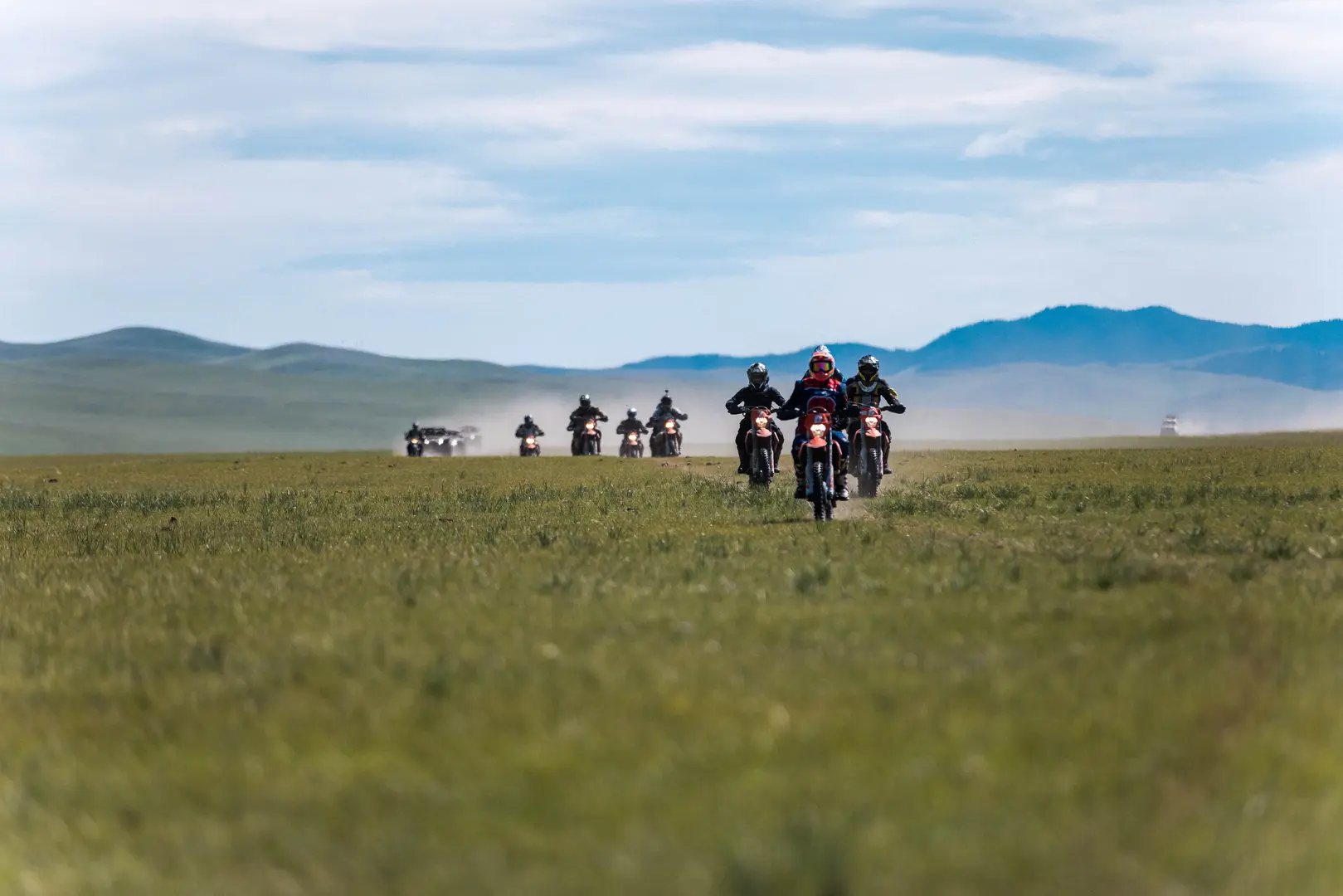
An enduro trip through Mongolia is not a weekend ride. You'll cover up to 240 kilometres a day across desert, steppe, canyons and mountains – on gravel, sand, dirt tracks and terrain with no path at all. The right gear makes you faster, safer and more relaxed. The wrong gear makes everything harder than it needs to be.
Protective gear: no compromise
There are no clinics around the corner in Mongolia. That makes protective equipment not an optional extra but the foundation of every riding day.
Helmet and goggles
An enduro or off-road helmet with good ventilation is ideal. Temperatures swing from 5 °C in the morning to 35 °C at midday, so flexibility matters. Goggles rather than an integrated visor are recommended – they perform better in dust clouds and are easy to swap.
Body armour
Knee, elbow and shoulder guards are baseline. A back protector – either built into the jacket or worn as a separate vest – is not a luxury, it is mandatory. The terrain is hard: rocks, ruts, deep tracks. When you go down, you land on hard ground, not tarmac.
Gloves
Full enduro gloves with knuckle protection. Not half-finger gloves, not city bike gloves. After three hours of gravel with the wrong gloves your hands are done – you will feel it on the bars.
Boots
Enduro boots with solid ankle support. A bad ankle roll on the wrong angle can cost you riding days. Motorcycle touring boots are not enough for this kind of terrain.
Clothing for long riding days
Mongolia's temperatures are unpredictable: fresh in the morning, hot by midday, cold again in the evening – add wind, dust and occasional rain. Your clothing needs to handle all of this.
Enduro jacket with ventilation
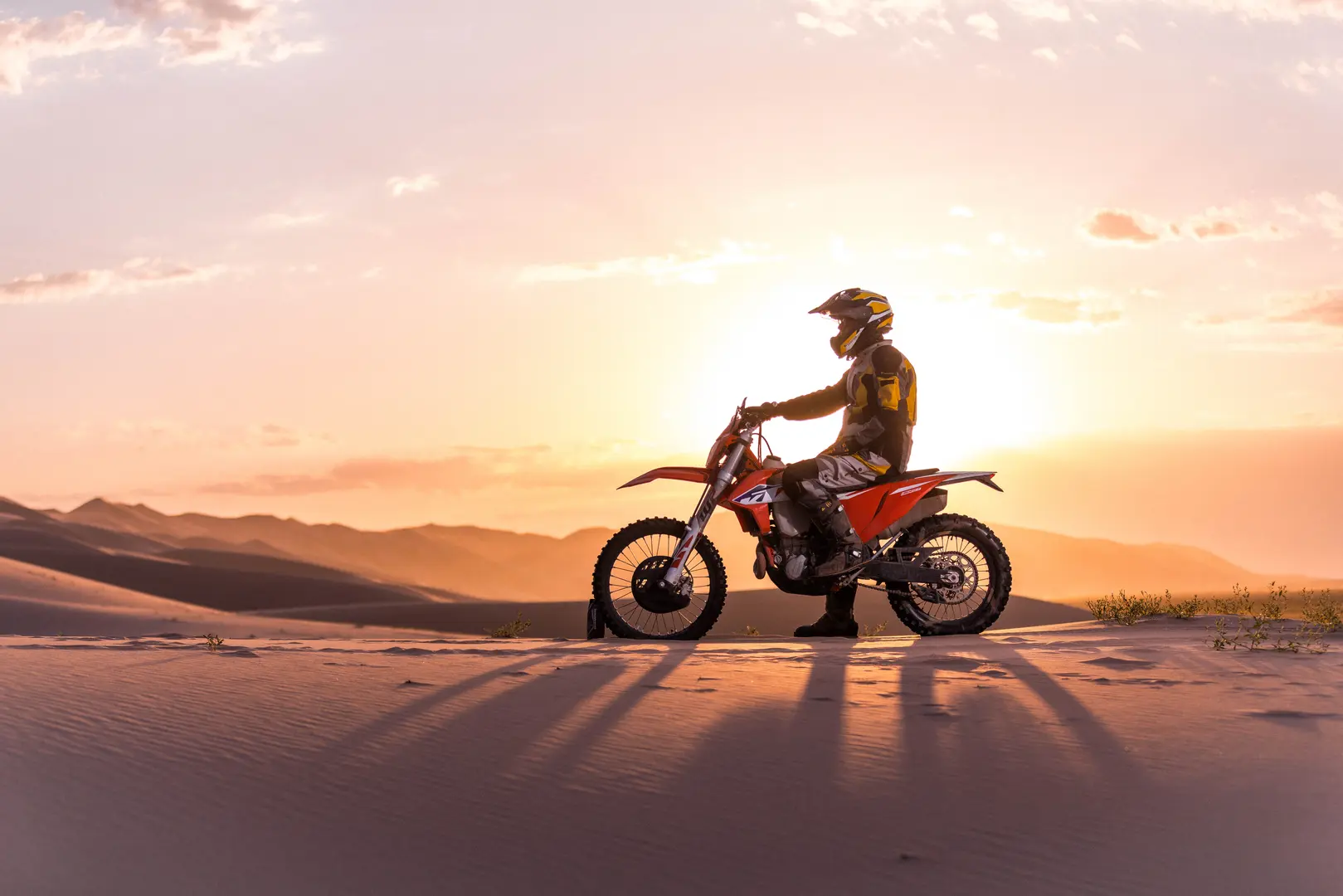
A textile jacket with venting zones, armour and a removable thermal liner for cooler mornings is ideal. Leather is a poor choice in desert heat.
Riding trousers
Sturdy trousers with knee and hip protectors. Do not substitute regular outdoor trousers – the impact and stress in off-road terrain are fundamentally different.
Base layers
Moisture-wicking base layers. Cotton is not your friend in the desert: it absorbs sweat and barely dries. Merino wool or synthetic fabrics are far better.
The hydration pack: essential equipment, not an accessory
A hydration pack with at least 2 litres of water bladder is not a comfort extra on this tour – it is a necessity. Riding days of four to six hours in the field, Gobi heat and few stops are the reality. Riders without a hydration pack consistently under-drink, and you will feel that from the third hour onwards.
The pack also carries everything you need during the day: sunscreen, snacks, a light rain layer, a camera. The panniers on the bike stay closed while riding.
What the tour team provides
You do not need to bring everything yourself. The tour provides motorcycles with full pannier systems, support vehicles with technical equipment, tools and tyre repair. Minor repairs and punctures are handled by the tech team – you are never alone with a problem on the track.
What you must bring yourself: personal protective equipment, clothing and a hydration pack. These items are too individual for the team to provide.
Quick checklist